


A practical, evidence-based fact sheet for building occupants, owners, clinicians, and attorneys
by Dave Gold, CIH CSP
President, Gold Health and Safety Consulting, Inc.
November 23, 2026
If you have been researching mold problems online, chances are you have encountered advertisements or recommendations for an “ERMI test.” These tests are often promoted as a “scientific” way to determine whether a building is “safe” or “toxic” based on a numerical score.
Meanwhile, some mold inspectors claim that ERMI testing can prove hidden mold contamination or explain chronic health symptoms. We’ve also heard of doctors recommending that their patients get ERMI samples performed in their building.
Let’s dive into a discussion about the value and use of ERMI samples.
What Is an ERMI Test?
ERMI stands for Environmental Relative Moldiness Index.
The ERMI method was developed by the U.S. Environmental Protection Agency (EPA) as a research tool to compare indoor mold levels across groups of buildings in large scientific studies. The test analyzes DNA from mold spore species found in settled dust samples using a laboratory method called qPCR. The lab then calculates a numerical score based on the type and amount of mold spores detected.
While qPCR lab analysis is a valid analytical method that can be useful in some cases, ERMI scoring was never designed to function as a diagnostic tool for individual buildings. It was created for population-based research studies, and not as a pass/fail test for use in mold investigations. That distinction is critically important. Nonetheless, many consultants continue to advocate using ERMI sampling, and laboratories are willing to perform the analysis and scoring.
What the EPA Actually Says About ERMI
Many clients are surprised to learn that the EPA itself has advised against using ERMI as a mold investigation methodology.
The EPA has emphasized that ERMI was developed as a research method and has limitations when applied to individual buildings. In other words, the organization that developed ERMI does not recommend using it as a basis for declaring a building healthy or contaminated. Unfortunately, that information is often missing from online discussions and marketing materials or not shared with clients.
What is a HERTSMI-2 test?
HERTSMI-2 scores are derived from ERMI results to specifically target five species that some clinicians believe are an inflammatory or toxic risk, making it more streamlined and affordable. However, it leaves out other potentially problematic mold spores, such as Penicillium species.
Since “mold toxins” as a health threat in the indoor environment has little scientific credibility[1] (See GHSC’s Fact Sheet on Mold Toxins for more information), and the data is already based on the same sampling methods as an ERMI test (which we’ll discuss further below), there is little value in performing this type of testing either.
The Problems With ERMI Testing
- ERMI Tests for Spores in Settled Dust
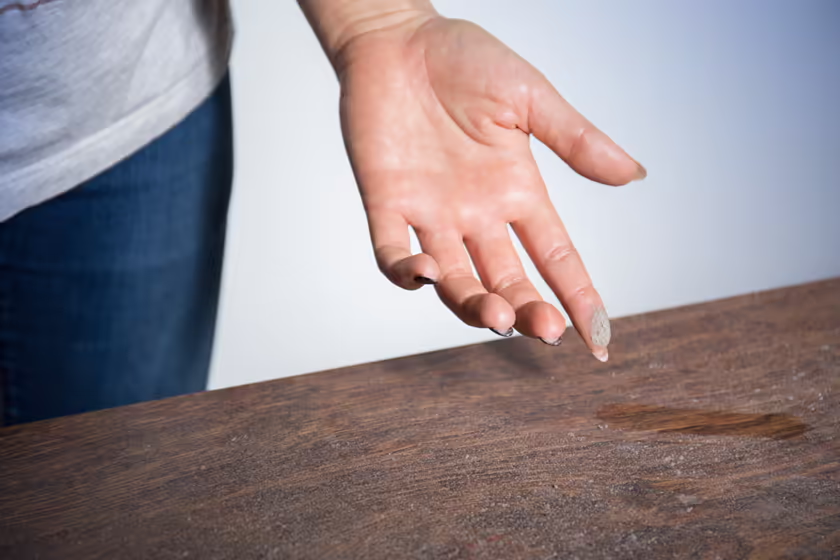
ERMI tests use qPCR to analyze settled dust for spores. Settled dust accumulates in every building over time – days, weeks, months, or years. This is important, because all settled dust is going to contain mold spores, since mold spores are present airborne virtually everywhere on earth, and are going to settle over time on surfaces indoors. Also, the amount of spores in the natural background can vary wildly over the course of the year.
You can already surmise that there’s going to be a high variability in the amount of indoor dust from building to building. It’s also easy to see that housekeeping is going to have a major impact on the amount of settled dust present inside any given building. Even buildings that have never had a mold problem and are kept relatively clean (such as a hospital) are going to have settled dust with spores in it, in some nook or cranny. Other indoor factors, such as carpeting vs. hardwood floors, and the presence of pets and houseplants are going to affect the amount of mold spores in a building without even considering any moisture intrusion events.
As a result, in GHSC’s opinion, ERMI testing tends to reflect the overall cleanliness of a building rather than the presence of current or past mold growth. A building could receive an elevated ERMI score even if there is no active leak, no current or past mold growth exists, and the building is dry and stable.
On the other hand, a building with a mold problem may produce a relatively modest ERMI score if the sample location was recently cleaned or poorly selected, the mold is well contained, or the mold is still damp. If spores have not been disseminated indoors, the ERMI score will be biased low.
- The ERMI Sampling Method Is Highly Variable
ERMI results can vary dramatically depending on where the dust is collected, the technique used by the sampler, and how much dust is present. Two people sampling the same building may generate substantially different results.
The original method for collecting ERMI samples was to use a vacuum cleaner to collect the sample off of 2 square meters of carpet in each of two rooms (living room and a bedroom). This sample method has many issues with collection variability – vacuum cleaner flow rates, techniques used while vacuuming (speed, pressure, how many passes, etc.) carpet pile height (such as shag versus low-pile carpet) and more. To compare a sampling method with inherent variables against a fixed standard is not very good science.
Since the original method was specified by the EPA, people have started using other sampling methods (meaning, not included in EPA’s original sampling method), such as wiping a surface with a Swiffer. One question arises immediately with this method…how much surface area did they wipe? And should we compare this same sample collection method against the ERMI score, which was developed for carpet vacuum samples?
This lack of stable, repeatable, and accurate quantitation of the sampling method is a major shortcoming of ERMI testing. The high variability of ERMI sample collection is poorly suited for definitive pass/fail conclusions.
- ERMI Samples Do Not Locate the Source of Mold Problems
Mold growth absolutely requires moisture. That means the foundation of any mold investigation should be identifying moisture issues – their source and what needs to be done to correct the problem.
ERMI testing does not provide any answer in this regard. An ERMI test does not identify where mold growth exists, whether materials are wet, whether growth is active or old. ERMI samples do not address air quality at all. For that matter, without identifying and correcting the source of moisture, any type of testing alone has limited value.
- “Safe” and “Dangerous” ERMI Scores Are Overstated
One of the most concerning trends in the mold industry is the use of fear-based interpretation of ERMI results. Some companies provide rigid ERMI interpretations such as “safe” or “toxic.” Occupants are sometimes told that their building is “toxic,” their belongings are permanently contaminated, and that they must leave immediately. Often this is accompanied with expensive remediation quotes.
These thresholds are presented without supporting science. There is no universally accepted sampling method (ERMI or otherwise) that defines whether a building is healthy or unhealthy for occupants under every circumstance.
Mold problems should be taken seriously when they exist — but conclusions should be based on evidence, moisture investigation, and good science rather than fear.
- ERMI Testing is Relatively Expensive
Another important consideration is its cost. ERMI testing is significantly more expensive than traditional mold sampling methods, usually three or four times the cost per sample. Depending on the number of samples, an investigation using ERMI samples can easily exceed several thousand dollars.
Comparing ERMI Testing vs. Conventional Mold Sampling Methods
While no testing method is perfect, traditional mold sampling methods frequently provide more practical and interpretable information than ERMI testing when used correctly, and at a substantially lower cost-per-sample as well.
Airborne Mold Spore Sampling
Airborne mold spore samples evaluate what is actually circulating in the breathing environment at the time of testing. Since airborne mold spores are the primary route of exposure to mold, these results are more important from a human health standpoint than analyzing spores found in settled dust. It is well known that elevated airborne mold spores may affect occupant health.
That being said, it is also true that airborne mold spore samples are not significantly effective for finding hidden mold. Another problem is that many consultants misinterpret the air sampling results.
Tape Lift and Swab Sampling
Tape lifts are also relatively inexpensive and can often provide rapid, highly useful information about surfaces during an inspection. Unlike ERMI, tape lifts are location-specific. They allow the investigator to evaluate actual suspect materials rather than analyzing mixed historical dust from unknown sources.
Tape lift sampling involves collecting material directly from a visible suspect surface. This method can help determine whether a surface has growth on it or not, and the type of fungal growth present. Tape lifts are also useful in determining if surfaces have become secondarily contaminated from higher-than-normal amounts of airborne spores that settled out.
Swabs may also be used to collect surface samples. In GHSC’s opinion, tape lifts are more practical for hard surface sampling, and swabs are better for soft surfaces (such as fabric). They can also be helpful in hard-to-reach locations.
The biggest advantage of tape lifts and properly interpreted air samples is that they can be tied directly to building conditions observed during an inspection.
In Summary….
- An airborne mold spore sample can provide evidence of airborne contamination.
- A tape lift can confirm fungal growth on surfaces or an abundance of settled spores.
- Sampling alone is not enough to determine the extent of a building’s mold growth problem or what corrective work is needed. A physical investigation is needed to determine if significant mold problems are present, where, and why.
GHSC’s Real-World Field Experience with ERMI
GHSC has been asked on several occasions to follow-up with ERMI testing, either conducted by a building occupant or another consultant. In most cases, these scenarios did not include an appropriate building conditions investigation.
GHSC has frequently observed that buildings can have bad ERMI scores without any evidence or history of moisture intrusion, even when appearing to be very clean, and airborne mold spore levels are low. For these reasons, and all the problems discussed above, GHSC does not recommend the use of ERMI sampling.
Case History: – Elevated ERMI Score – Wrong Room Demolished
GHSC investigated a case in Palos Verdes where a prior consultant, based on ERMI samples, advised the homeowner to rip out walls in their child’s bedroom. After demolition, no evidence of mold growth was found in the bedroom. Unfortunately, the homeowner spent thousands of dollars on a remediation and rebuilding project that appeared to be for nothing.
Ironically, GHSC found a mold problem in the home’s kitchen that needed remediation, which the prior consultant had missed completely.
Case History: Elevated ERMI Score — But No Mold Growth
GHSC investigated a home in Sherman Oaks where a prior mold inspection reported that while there were no mold problems observed in the building, the home needed decontamination due to a high ERMI score. The inspector’s fee was over $10,000. The inspector recommended that a remediation costing $18,000 be performed, followed by $8,000 post-remediation testing. How does any of this make sense if no actual mold growth was found?
GHSC’s investigation also did not find any mold problems present. Our samples for total airborne mold spores were normal. Considering there were no actual mold problems, no remediation was warranted. Our inspection fee for this project was under $1,000.
Case History: Failed Post-Remediation Due to “Elevated” ERMI Score — But No Problems
GHSC was asked to perform a post-remediation investigation at a condominium that another consultant had repeatedly failed due to an “elevated” ERMI test result. GHSC’s inspection observed that the remediated area was clean and dry and had no remaining mold growth. In addition, GHSC’s post-remediation airborne mold spore samples were within normal range. As a result, the project met GHSC’s post-remediation criteria.
As mentioned above, GHSC frequently finds that buildings with a “bad” ERMI score are not in fact problematic.
The Bottom Line
In GHSC’s opinion, ERMI testing rarely provides useful information, and is often misunderstood, oversold, and misapplied. In most situations, relying on ERMI results can lead clients toward inaccurate conclusions, unnecessary fear, and unnecessary remediation.
If you suspect a mold problem, the investigation should focus on:
- A detailed visual inspection;
- Checking areas with a moisture meter and/or an infrared thermography camera;
- Limited airborne spore sampling where appropriate;
- Wall or ceiling cavity inspection in damaged areas; and,
- Surface samples via tape lift when needed.
These methods often provide more actionable information because they help determine:
- Whether mold growth is present and active;
- Whether air quality is affected; and
- What corrective actions are actually needed.
An expensive laboratory analysis alone is far less useful than a focused building investigation.
[1] It should be noted that while the issue of the impact of mold toxins on human health in indoor environments is questionable, there is no question that mold can potentially impact occupant health.


